 I know from just about everywhere that people just aren’t that in to reading anymore. Even when people are consuming books, audio books are a growing segment. From recent data that I looked up, the median number of books consumed per year is just 5. Half the people in America consumed less than five books last year. I typically average around a book a week. Are they all code-related? No. They aren’t even all non-fiction. I read quite a bit of fiction as an outlet for my imagination, as I watch less and less TV every year. I know that I’m not typical, so I want to try to be a little pragmatic here.
I came across a site called Actionable Books. This site has a section called “Summaries” where you can read people’s “Actionable Summaries” of books. At the time that I’m writing this, there are summaries for “1005 Top Business Books”. The way that the site works is that people read the books and they summarize the gist of the book, called “The Golden Egg”. Then, they also find two “Gems” from the book (accompanied by quotes). Here is a link to the summary of Good to Great by Jim Collins, so you can check out what I mean.
For the vast majority of business books, this site is amazing. I’ve long been a critic of these “single shot” business books. Typically, the author will have an idea that is good for 2-3 chapters, tops. After that, he’s beating a dead horse to try to hit some word count. For those kinds of books, Actionable Books is perfect. They’ll distill it down for you and you can get the idea without reading 200 pages of fluff.
For books that actually are full of value, you can read the summary and then – seeing the value – buy the whole thing. It is like a Book Review++++. So, if you are like me and like to read business books to build up your soft skills and business acumen, but don’t want to risk wasting your time with “low fat” books, check out Actionable Books.
 In this episode, I take a look at a question that I ran across, “Is Coding the Easy Part?” I engage that question and take a look at everything that developers need to do to create quality software and try to figure out where the actual “writing code” part falls in the rankings.

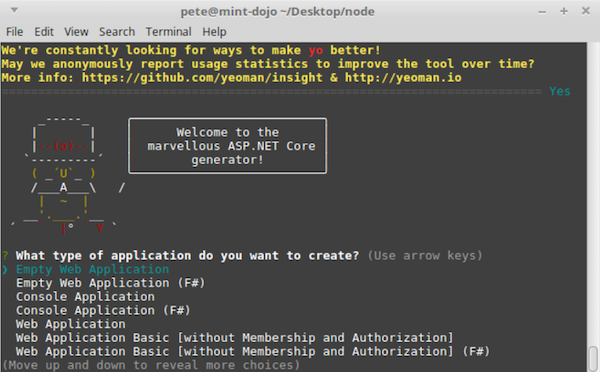
 What a time to be a .Net Developer. It used to be that one had to hang your head in certain circles when you were asked about your job. Admitting that you programmed in the Microsoft stack was seen as “less than cool”. All the cool kids were programming in Ruby, Node, Haskell, etc. Pick your poison. It was more popular than ever to write the “Why I’m Leaving .Net” blog post and just vamoose.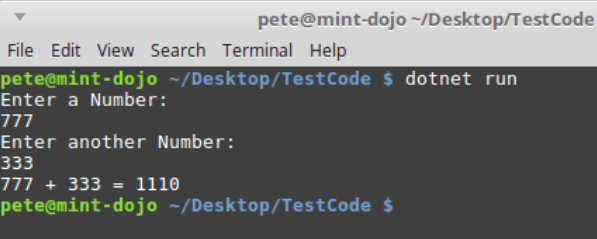
 The World Wide Developer’s Conference (WWDC) is like the Super Bowl for Apple Developers. Thousands of developers vie to get a ticket and even those without tickets still go to San Francisco and attend ancillary events. As I’ve done the last few years, I watch the keynote and distill it down for you so you can trade 2 hours of your life for about 15 minutes of wrap up 😉
 In the latest post on my series about C# 6’s features, I want to look at nameof expressions. There are times when you need the string value of variables or methods or classes in your code. That could be to return an argument exception, it could be to have some sort of property changed notification, or it could even be to get the string value of an enumeration value.